
Are you also searching for the right materials to build outdoor bar stools? It can be quite a headache. I have dealt with faded plastic and broken wicker myself. I also had iron chairs that left ugly rust spots on my wood deck. I read many real user reviews on Amazon. I also talked with other patio owners online. Soon, I saw I was not the only one. We all deal with the same patio chair problems. These include sun damage, rust, shaky legs, and hard upkeep.
Let’s avoid those expensive mistakes. We will look at the 5 top materials for outdoor bar chairs. We will cover their pros and cons. This guide is built on my personal experience and tips from real owners to fix your seating issues.
1. Aluminum: Fixing the “Heavy & Rusty” Problem
The Problem: You want to pull your bar chair out easily. But heavy iron chairs scratch the floor. Also, steel chairs will rust after a few rainy months. The Solution: Cast or extruded aluminum.
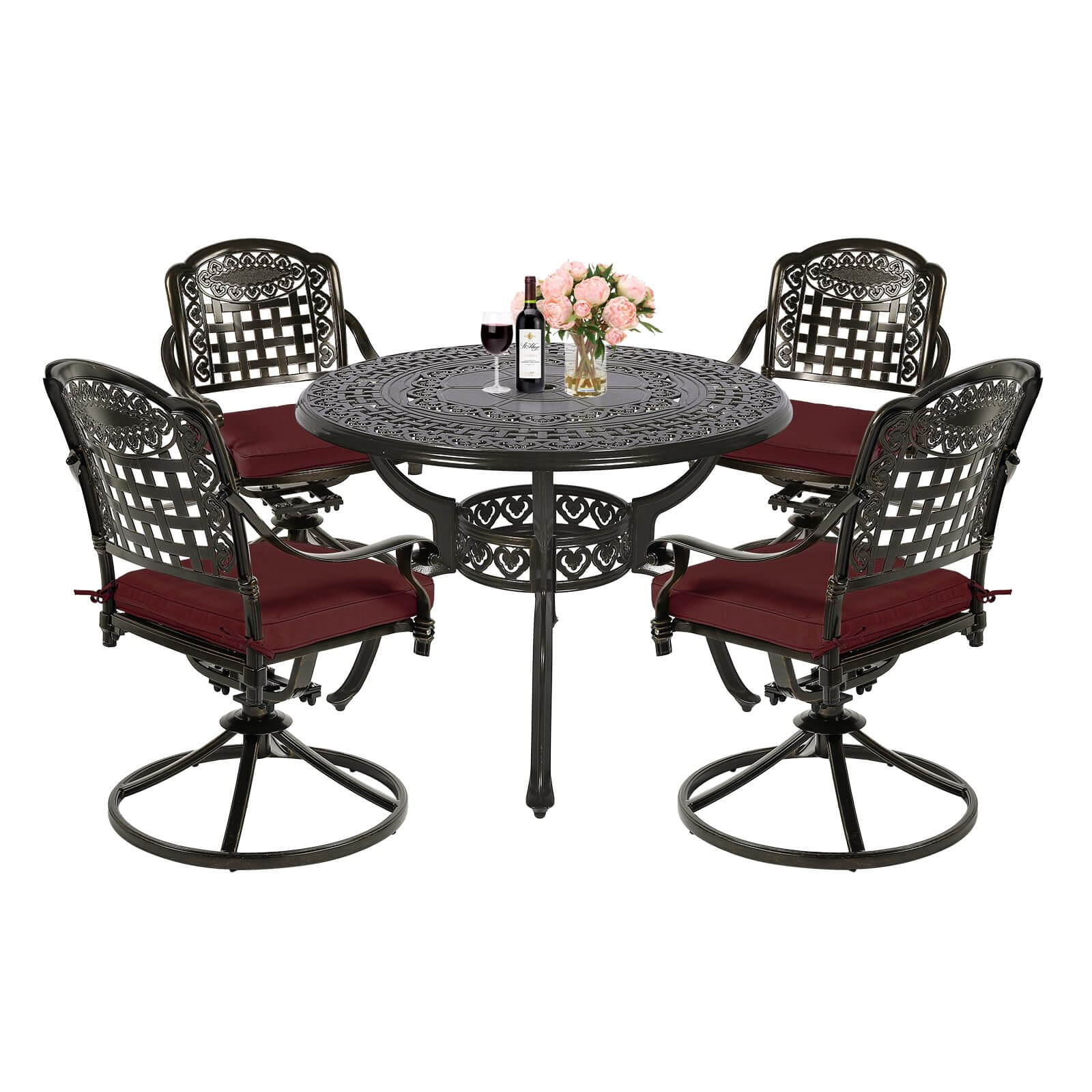
A few years back, I bought a pretty set of steel bar stools. By the second year, their joints had rust. They were also very heavy. My kids could not even move them. So, I traded them for cast aluminum chairs. This change was amazing. Aluminum does not rust naturally. Plus, it is very light.
I read hundreds of Amazon reviews. The buyers all agree. Homeowners love aluminum because it never rusts. This is super helpful for people in damp or beach areas. Still, I found one piece of good expert advice online. Make sure these chairs have a powder-coated finish. This coating stops the metal from getting too hot in the bright sun.
- Pros: 100% rust-proof, very light, simple to move, lasts a long time.
- Cons: Can fall over in strong winds. The metal gets hot or cold based on the weather. You need cushions to feel really comfy.
2. High-Density Polyethylene (HDPE) Wicker: Stopping the “Cracking & Unraveling”
The Problem: Normal rattan or cheap PVC wicker looks nice for one summer. Then, it gets dry and breaks. It falls apart under the hot sun. This makes your outdoor living space look bad. The Solution: Synthetic Resin Wicker (mostly HDPE).
I must admit something. I once bought a very cheap set of PVC wicker bar chairs. I thought it was a great deal. By the next spring, they looked terrible. They looked like a stray cat scratched them up. Then, a friend gave me a great tip. They told me about HDPE (High-Density Polyethylene) resin wicker.
Cheap plastic fades quickly. But HDPE has color mixed all the way through. It is made to handle strong sunlight. Many owner tips online say the same thing. Always make sure the wicker is HDPE before you buy it. It gives you a fancy resort look. At the same time, it saves you from the pain of broken furniture.
- Pros: Classic look, blocks weather well. It fights UV rays (does not fade or crack easily). It feels very nice even without cushions.
- Cons: Cheaper PVC types are out there. People mix them up with HDPE easily. Good resin wicker can cost a lot of money.

3. Polywood / Recycled Plastic: Ending the “Maintenance Nightmare”
The Problem: You like how painted wood looks. However, you hate the yearly work. You hate sanding, staining, and painting it. You also hate sealing it to stop rot and splinters. The Solution: Poly lumber (High-Density Polyethylene lumber).
Do you want a simple option you can just leave alone? This is it. I spent too many summer holidays sanding wood furniture. I should have been relaxing. Changing to poly lumber fixed everything. It is made from old milk jugs and plastics. This material looks just like painted wood. But it needs zero work from you.
Busy families love this option. People talk a lot about the maintenance tips for polywood. You really just spray it with a hose. Or, you wipe it with soapy water. It will not splinter, rot, or lose its color. Because of this, it might be the best material for outdoor bar chairs if you want something to last forever.
- Pros: Good for the earth, blocks water and rot, needs no work, heavy enough for strong winds, keeps its color.
- Cons: Costs more at first. It does not feel exactly like real wood. It is heavier to pick up and move.
4. Teak Wood: Balancing “Luxury Aesthetics” with Natural Weathering
The Problem: Fake materials just do not give that rich, natural feel to your garden seating area. But normal wood rots way too fast outside. The Solution: Grade-A Teak.
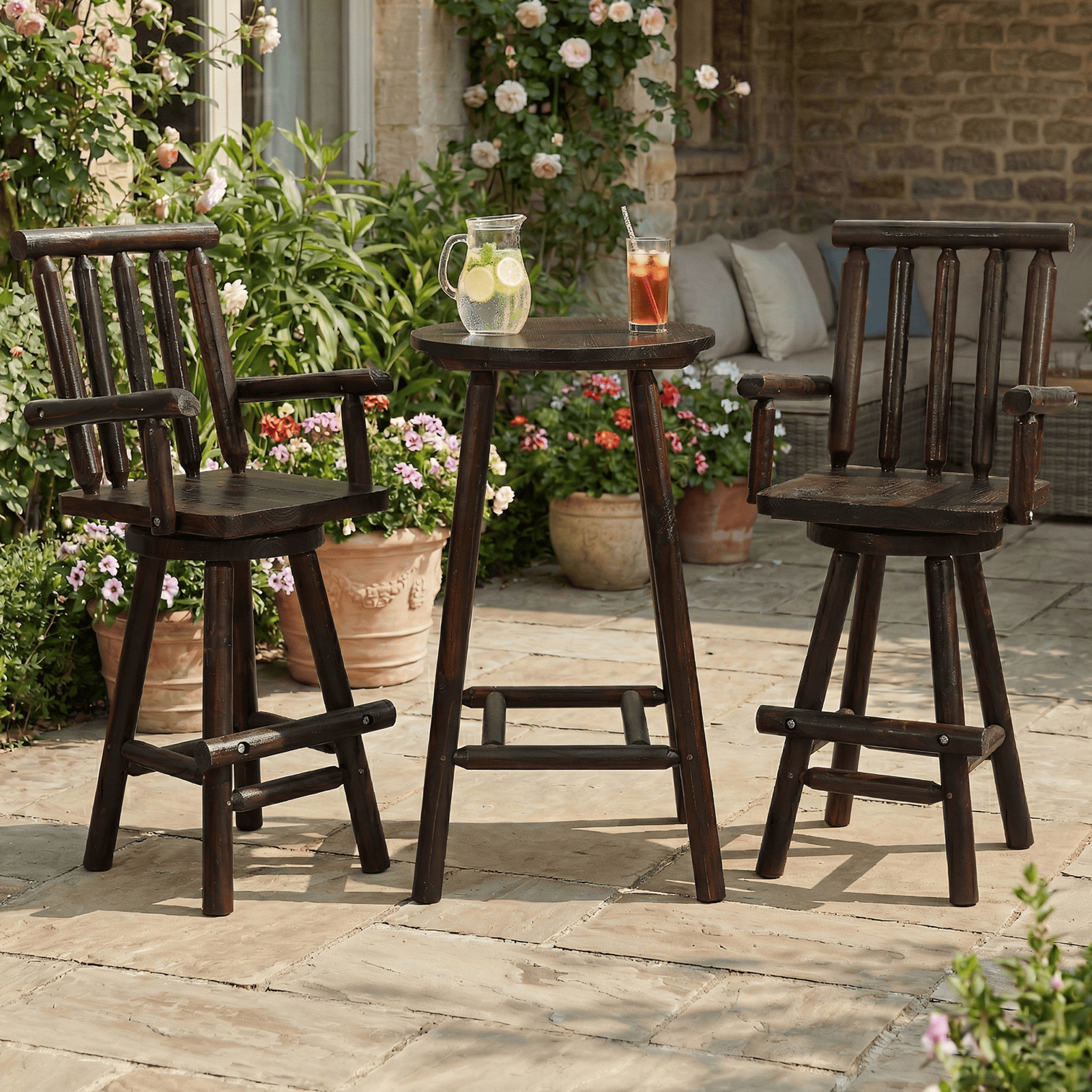
Real wood brings a nice, warm feeling. I own a teak bar table. I love it very much. Teak is thick and strong. It is full of natural oils. These oils fight off water and bugs.
Owning teak means making a choice. This is a big topic in real user reviews. You can rub teak oil on it a few times a year. This keeps its warm brown color. Or, you can do nothing. It will slowly turn a nice silver-gray color. What is my personal experience? I let mine turn silver. It takes less work. It also looks very classy. If you pick teak, just be ready for the high price. You also must decide how you want it to look as it gets older.
- Pros: Super beautiful, very tough, fights water and bugs naturally, stays cool in the sun.
- Cons: Costs a lot of money. You must oil it if you want the first color to stay. You need to buy it from good earth-friendly sources (look for FSC tags).
5. Wrought Iron & Steel: Conquering the “Windy Patio” Dilemma
The Problem: You live in a place with strong winds. Maybe you live in the Midwest or on a tall balcony. Light chairs keep blowing away. They get broken or hit other things. The Solution: Powder-coated wrought iron or steel.
I really like aluminum. However, my brother lives in a very windy beach town. His light aluminum chairs blew into his neighbor’s yard all the time. He changed to thick wrought iron bar chairs. That problem stopped right away.
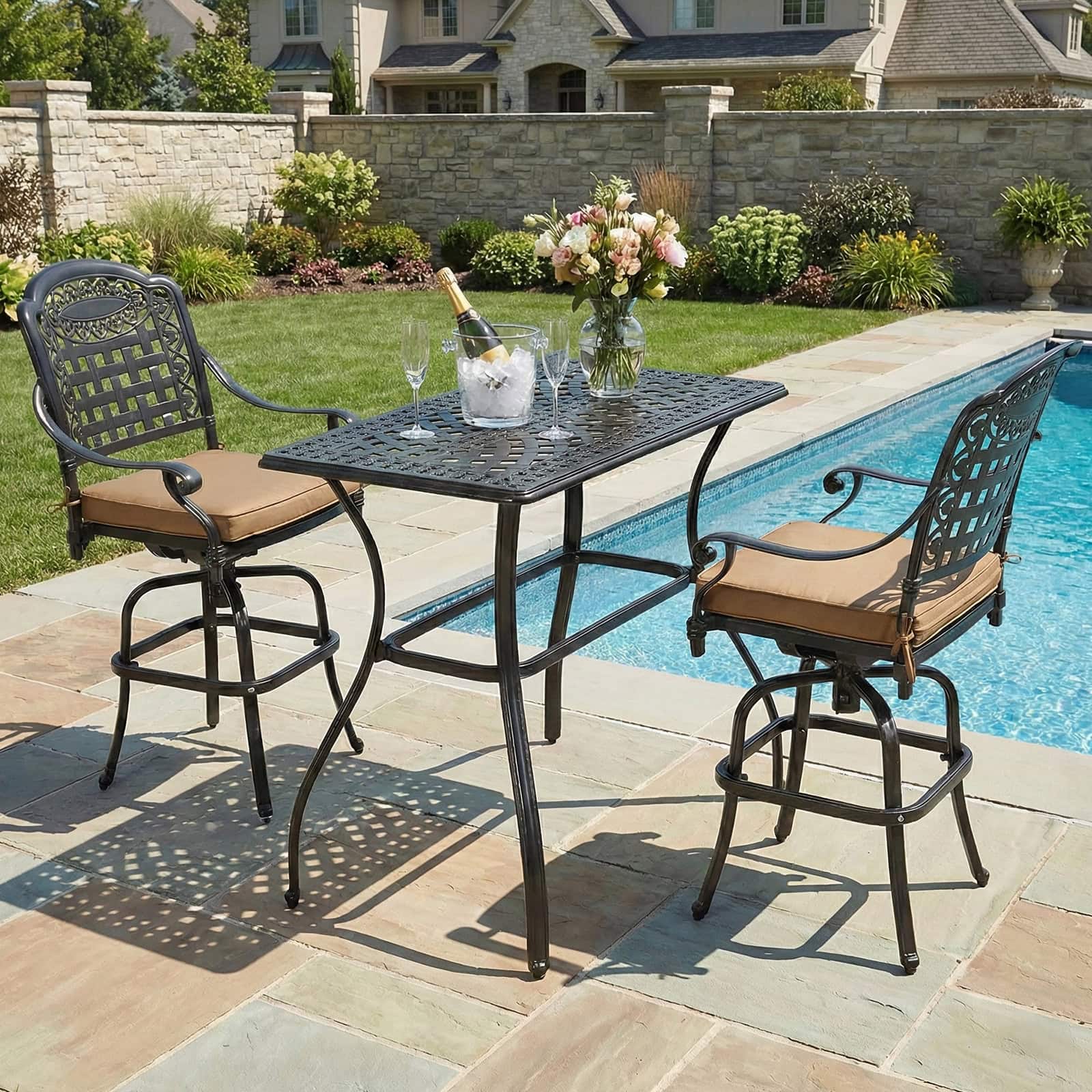
Steel and iron are super steady. They also have a nice, old-school shape. But there is one big warning. Bad product reviews mention this often. That warning is rust. If you buy these metals, here is my expert advice. Make sure the chairs have a thick powder coating. Also, if the paint gets a scratch, fix it fast. Paint over the scratch with special rust-blocking paint. This stops rust before it starts.
- Pros: Very strong, heavy enough to stay put in bad winds, classic and pretty shapes.
- Cons: Hard to carry around. It will rust if the paint gets scratched. It gets hot in summer and cold in winter.
Quick Buying Guide: Matching Material to Your Climate
Let’s sum things up. Picking the best outdoor chairs is about matching the material to your local weather and your daily life:
- For rainy or wet places: Pick Aluminum or Polywood. (Do not buy plain iron).
- For sunny and hot places: Pick HDPE Wicker, Teak, or Polywood. (Do not buy dark metals. They can burn your skin).
- For windy spots: Pick Wrought Iron, Steel, or Polywood. (Do not buy light aluminum or cheap plastic).
- For zero extra work: Pick Polywood or Aluminum.
Conclusion
Making a great outdoor living space should not make you mad. Now you know the good and bad points of these materials. You can skip the normal traps like fading, rusting, and never-ending work. Maybe you want the easy, no-work style of polywood. Maybe you need the heavy weight of wrought iron to fight the wind. Or maybe you want the soft feel of HDPE wicker. The best material for outdoor bar chairs is the one that gives you a break. It lets you work less on your patio and enjoy it more.
Are you ready to improve your patio? Look at your current outdoor setup. Think about your local weather. Then, check out some top-rated and durable patio seating choices we talked about. Find your perfect match today!